
44550 Village Ct Ste 102, Palm Desert, CA 92260

Implant Supported Over Dentures: A Step-by-Step Guide to the Surgical Process
If you live in Rancho Mirage and you’re researching Implant Supported Over Dentures, you probably have one big question: what actually happens during the surgery? Fear of the unknown stops many people from moving forward. Understanding each step — from your first consultation through final healing — makes the entire process far less intimidating. This guide walks you through exactly what to expect, so you can feel confident before you ever sit in the chair.
Step One: Your Consultation and Treatment Planning in Rancho Mirage
Everything begins with a thorough consultation at Periodontics of the Desert. Your provider will review your dental and medical history in detail. They’ll also take digital X-rays and 3D scans of your jawbone to assess bone volume and density.
This step is critical for planning implant placement with precision. Your provider needs to know exactly where the implants will go before surgery begins. They’ll also evaluate your gum health and check for any signs of gum disease that need treatment first.
During this visit, you’ll discuss your goals and ask any questions you have. Your provider will explain how many implants are needed and outline the full timeline. Patients in Rancho Mirage appreciate this upfront, honest approach — there are no surprises later.
Step Two: Preparing Your Mouth — Bone Grafting and Periodontal Care
Not every patient moves directly to implant surgery after their consultation. Some patients need preparatory work first. This is completely normal and doesn’t mean you’re not a candidate for implants.
If your jawbone has lost density — often from years of tooth loss — bone grafting may be recommended. A bone graft adds volume to the jaw so it can firmly support your implants. The graft heals over several months before implant placement begins.
Gum health is equally important. If you have gum disease, scaling and root planing will be completed before surgery. This deep-cleaning procedure removes bacteria from below the gumline. Treating gum disease first protects your implants from infection after placement.
- Digital X-rays and 3D scans confirm bone structure
- Bone grafting builds up the jaw if needed
- Scaling and root planing clears gum disease
- All prep work protects your long-term implant success
Step Three: The Implant Surgery Itself — What Actually Happens
On the day of your implant surgery, your comfort is the top priority. Periodontics of the Desert offers multiple sedation options to keep you relaxed throughout the procedure. Many patients choose Oral Sedation, which allows you to remain calm without being fully unconscious.
For patients with higher anxiety, IV sedation is also available. IV sedation works quickly and allows your provider to adjust your comfort level in real time. You’ll feel little to nothing during the procedure itself.
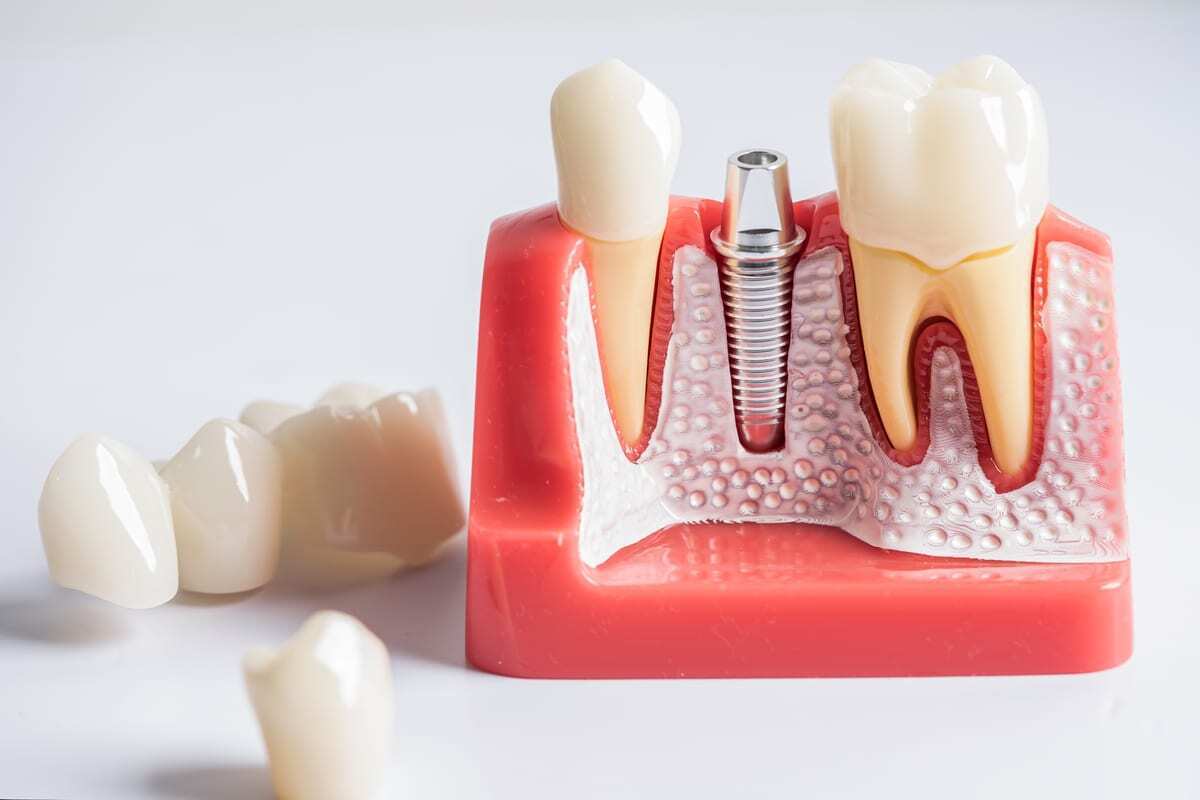
Once sedation takes effect, your provider makes small, precise incisions in the gum tissue. These openings allow access to the jawbone beneath. A titanium implant post is then carefully placed into the bone at a pre-planned angle and depth.
The number of implants placed depends on your treatment plan. Implant-supported dentures typically require two to six implants per arch. Each post acts as an artificial tooth root that will eventually fuse with your bone.
- Sedation is administered before any incisions are made
- Small incisions expose the jawbone safely
- Titanium posts are placed at precise angles
- Gum tissue is sutured closed around each post
- The entire surgical phase often takes one to two hours
Step Four: Osseointegration — How Your Bone and Implants Bond
After surgery, healing begins immediately. The most important part of this phase is called osseointegration. This is the process where your natural bone slowly grows around and fuses with each titanium implant post.
Osseointegration takes roughly three to six months for most patients. During this time, you’ll wear a temporary denture so you’re never without teeth. Your provider will monitor your healing at scheduled follow-up visits.
It’s normal to experience some swelling and mild discomfort in the first few days after surgery. Most patients manage this easily with prescribed medications and simple home care instructions. Rancho Mirage patients typically find the recovery far more manageable than they expected.
You’ll be asked to eat soft foods and avoid putting pressure on the implant sites during healing. These precautions protect the posts while bone integration takes place. Following your provider’s instructions closely leads to the best long-term outcome.
Step Five: Attaching Your Final Implant-Supported Denture
Once osseointegration is complete, it’s time for the most rewarding step. Your provider will attach your permanent, custom-crafted denture to the implant posts. This final restoration is designed to look, feel, and function like natural teeth.
The denture snaps or screws securely onto the implants. It won’t slip, shift, or fall out the way traditional dentures can. You’ll be able to eat, speak, and smile with full confidence from day one.
Your provider will check your bite and make any final adjustments during this appointment. The goal is a restoration that fits perfectly and feels completely natural. Most patients leave this appointment with an immediate boost in confidence and quality of life.
Frequently Asked Questions
How long does the entire implant denture process take from start to finish?
The full timeline varies by patient but typically ranges from six to twelve months. This includes any preparatory work like bone grafting, the implant surgery, the osseointegration healing period, and final denture placement. Your provider at Periodontics of the Desert will give you a personalized timeline during your consultation.
Will I be awake during implant denture surgery?
Most patients choose sedation to stay comfortable during surgery. Options include oral sedation and IV sedation, depending on your anxiety level and medical history. You won’t feel pain during the procedure, and many patients remember very little of the experience afterward.
Is implant denture surgery painful?
The surgery itself is not painful because sedation and local anesthesia are used throughout. After surgery, mild soreness and swelling are normal for a few days. Most patients find the discomfort very manageable with prescribed pain relief and cold compresses.
What if I don’t have enough bone for implants?
Bone loss is common after years of missing teeth, and it doesn’t automatically disqualify you from implants. Bone grafting can rebuild the jaw to create a stable foundation for implant placement. Your provider will assess your bone volume during the consultation and explain your options clearly.
Do implant-supported dentures require special maintenance?
Implant-supported dentures are easier to maintain than traditional dentures. You’ll brush and rinse them regularly, and your provider may recommend special flossing tools to clean around the implant posts. Routine check-ups at Periodontics of the Desert keep your implants and gum tissue healthy long-term.
If you’re a Rancho Mirage patient ready to take the first step, our team at Periodontics of the Desert is here to guide you with care, expertise, and full transparency. You deserve a smile that functions beautifully and lasts for decades. Book Now to schedule your appointment with our team.